

Skip to Content

Periodontics on the Upper West Side

Doctor

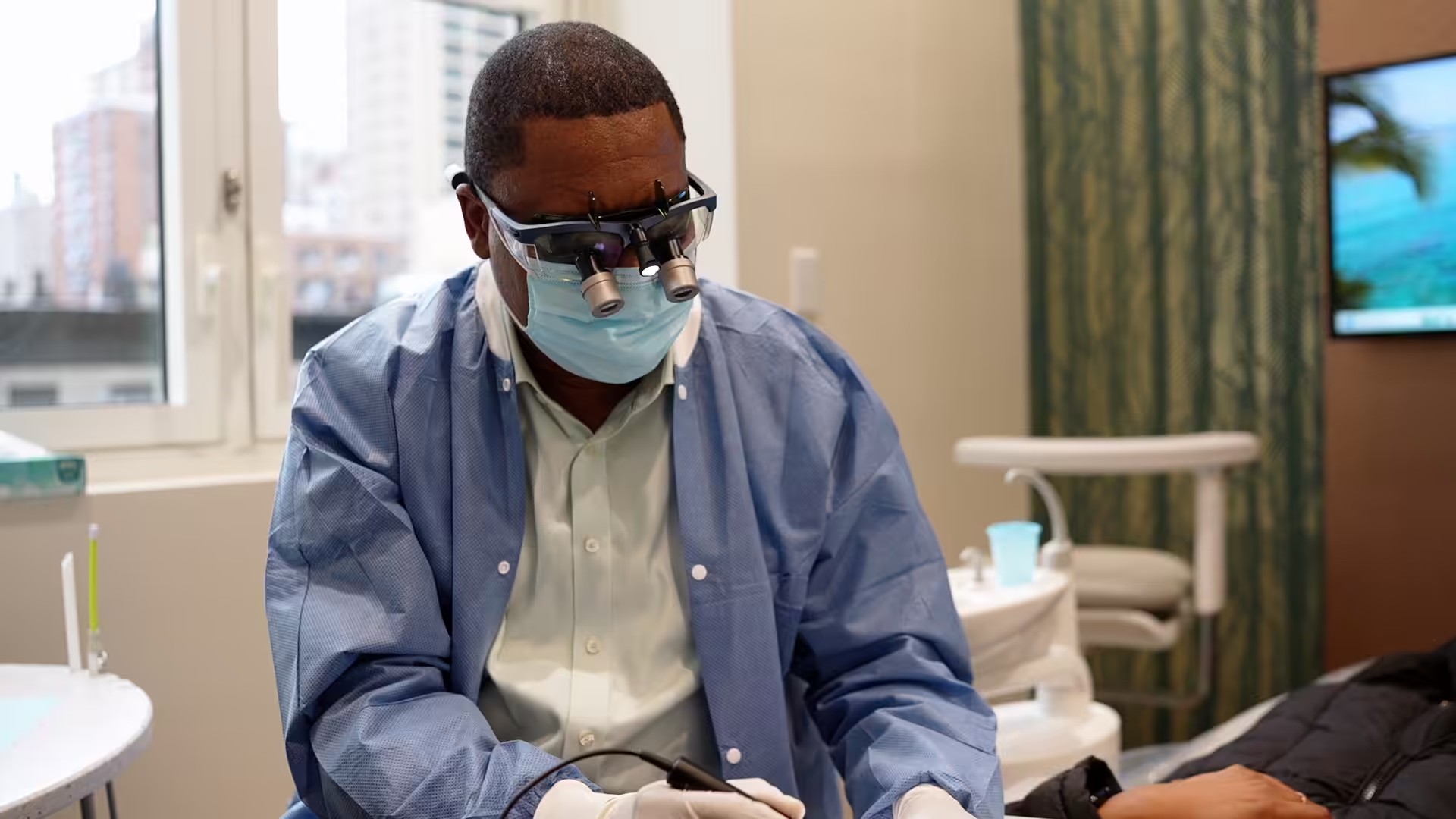
Periodontics is the branch of dentistry that focuses on the structures that support the teeth.

Smiles on the Upper Westside provides periodontic dental services in the UWS neighborhood of NYC. Call 212-222-5225 to schedule an appointment with our dentists.

Periodontics is the branch of dentistry that focuses on the structures that support the teeth. If the gums, jawbone, or soft tissue become infected or damaged, periodontal procedures can help. In addition, periodontics can fix certain cosmetic problems with your smile, and can prepare your mouth to receive dental implants.

Protecting oral health and periodontal health starts with recognizing the signs of gum problems, gum issues, bleeding, or exposed roots caused by untreated periodontal disease or advanced gum disease. Our team of skilled doctors in New York city works closely with you as your general dentist, and when needed endodontists who specialize in advanced endodontics, to diagnose concerns and recommend personalized treatment options. From painless surgical treatment and gum lift procedures to implant dentistry and precise dental implant placement, our entire team is dedicated to restore and maintain the healthy structure and natural beauty of your smile. With advanced techniques, patient education, and a commitment to excellence, every procedure is carefully completed to help you achieve exceptional results. If you notice symptoms linked to heart disease risks or other concerns, visit our office where care is displayed differently by a dedicated team focused on lasting periodontal care and clinical excellence.

Learn More about Periodontal Disease

Couple in park

Laser Periodontal Surgery

While brushing and flossing are the first line of defense against tooth decay and gum disease, regular professional cleanings are also required. When these cleanings are skipped, it is common for gingivitis, or inflammation of the gums, to occur. This is the first stage of gum disease. Scaling and root planing, a form of deeper professional cleaning, can clean out the pockets that develop between the teeth and gums, allowing gingivitis to heal.

As gum disease progresses to periodontitis, however, deeper pockets develop. At this point, surgical intervention is required. Laser periodontal surgery allows us to avoid traditional surgery and sutures, removing the bacteria and diseased tissue and sealing the pockets with minimal trauma. It is far less uncomfortable than traditional gum surgery, and healing time is significantly reduced.


The power of modern dentistry a case study of full mouth rehabilitation for isaac blog

Scaling and Root Planing

Scaling and root planing is a non-surgical procedure used to treat gum disease. During the scaling process, specialized dental instruments are used to remove dental plaque and calculus from beneath the gums. Planing is the procedure used to smooth the tooth’s root after the scaling process. Root planing helps the gums heal and reattach themselves to a cleaner and smoother root surface.

Periodontal maintenance patient

Periodontal Maintenance Program

Home care is an extremely important part of maintaining healthy teeth and gums, but even excellent home care cannot prevent bacteria and plaque. If the plaque is not removed, it can harden, becoming calculus. We will recommend a periodontal maintenance program that is best for you based on how quickly you develop calculus and your past and current periodontal health. During your maintenance visits, we will perform an oral examination as well as a dental cleaning.

During an oral examination, a visual inspection is performed to detect normal and abnormal structures of the entire mouth, head and neck. Along with radiographs, an examination detects cavities, abnormalities in existing dental restorations, gum and bone recession, and any other abnormal findings within the mouth, head, and neck

A dental cleaning, also known as an oral prophylaxis, is the removal of dental plaque and tartar (calculus) from the teeth. Specialized instruments are used to gently remove these deposits without harming the teeth. First, an ultrasonic device that emits vibrations and is cooled by water is used to loosen larger pieces of tartar. Next, hand tools are used to manually remove smaller deposits and smooth the tooth surfaces.

Osseous Surgery

Laser Bacterial Reduction

Laser bacterial reduction is a gentle, non-invasive dental therapy designed to eliminate harmful bacteria that reside below the gum line. Using advanced laser technology, this procedure targets and neutralizes the pathogens responsible for inflammation and gum disease without damaging the surrounding healthy tissue.

Learn More About Laser Bacterial Reduction
Woman w colorful earrings

Gum Grafting

Gum grafting treats root exposure resulting from receded gum tissue. Tissue is removed from the roof of the mouth or from gum tissue near the tooth and stitched into the area needing gingival repair.

What can i eat after dental implant surgery blog

Bone Grafting

When a tooth is lost or extracted, the jawbone begins to resorb into the body. This natural process can eventually create a sunken, hollow look. It can also make it difficult to place dental implants. Bone grafting can reverse bone loss, allowing proper support for dental implants and filling out the face to promote a younger appearance. Bone can be harvested from elsewhere in the body, or a synthetic material may be used.

Facial aesthetics patient smiles in mirror

Bone Regeneration and Ridge Preservation

Bone regeneration is a periodontal surgical procedure that regenerates jaw bone and surrounding tissue. This procedure is often performed to protect your existing teeth and the tissues that keep them in place from bacterial plaque. The gingival tissue is folded back to remove the disease-causing bacteria. Membranes, bone grafts, or tissue-stimulating proteins can be used to encourage the body’s natural ability to regenerate bone and tissue.

Ridge preservation involves placing a regenerative bone grafting material into empty tooth sockets to rebuild bone where an extraction has left an empty, weakened area. This process encourages your body’s natural capacity to regenerate bone.

Crown lengthening patient smiling

Crown Lengthening

Crown lengthening is commonly used to expose more tooth structure, crown lengthening involves the removal of gum tissue and/or bone to expose more of a tooth’s structure.

Frequently Asked Questions

What does a periodontist do for receding gums?

If your gums are receding, our first step is to identify the cause. When gum recession is caused by periodontal disease, for example, we need to treat the active infection before we address your receding gums. Gum grafting can be used to restore the gum tissue that has been lost, improving the appearance of your smile and eliminating painful tooth sensitivity.

Can gum tissue grow back?

No, gum tissue cannot grow back once it is lost, but it can be restored with a gum grafting procedure.

Can you reverse periodontitis?

When periodontitis is treated in its earliest stages, it can be reversed. In later stages, we can halt the active infection, but you may have permanent damage to your teeth and gums, including gum recession and tooth loss. Treating gum disease at this stage doesn’t reverse the damage, but the good news is that there are dental and periodontal procedures that can restore your smile and your self-confidence.

Does laser treatment for gum disease work?

Yes, laser treatment for gum disease is just as effective as conventional treatment. Laser treatment is also less painful, less invasive, and doesn’t involve incisions or sutures, which means recovery is faster and easier.

How can I make my gums healthy again?

If you have gum disease, treating the infection is our first priority. Scaling and root planing—a professional deep cleaning that goes below the gumline—is often all that is needed to reverse gum disease, but laser periodontal surgery may be needed in more advanced cases.

What is the purpose of crown lengthening?

Crown lengthening is a procedure that trims away excess gum tissue from one or more teeth. Sometimes this is needed in order to place a dental crown; other times, crown lengthening is done solely for aesthetic reasons—to correct a ‘gummy’ smile or improve the symmetry of the gums.

Are dental bone grafts painful?

No, bone grafting is not painful. Before your procedure, we use local anesthetic injections to ensure that you won’t feel any pain while we work.

If you are searching for a periodontist on the Upper West Side, call 212-222-5225 to schedule an appointment.

Contact our office today to request your appointment!

ADDRESS

15 West 96th Street, 4th floor
New York, 
NY 
10025

PHONE

Fax: 

212-222-4405
Smiles on the upper ws logodf 400w
location
Smiles On The Upper Westside
15 West 96th Street, 4th floor
New York,
NY
10025
212-222-5225
HOURS

HOURS

Monday | 

9:00 AM - 7:00 PM

Tuesday | 

9:00 AM - 6:00 PM

Wednesday | 

8:00 AM - 4:00 PM

Thursday | 

9:00 AM - 6:00 PM

Friday | 

Open for Periodontal Treatment

Saturday | 

Closed

Sunday | 

Closed
SOCIAL
Accessibility
 
DESIGN AND CONTENT ©
2013-
2026
BY
DENTALFONE