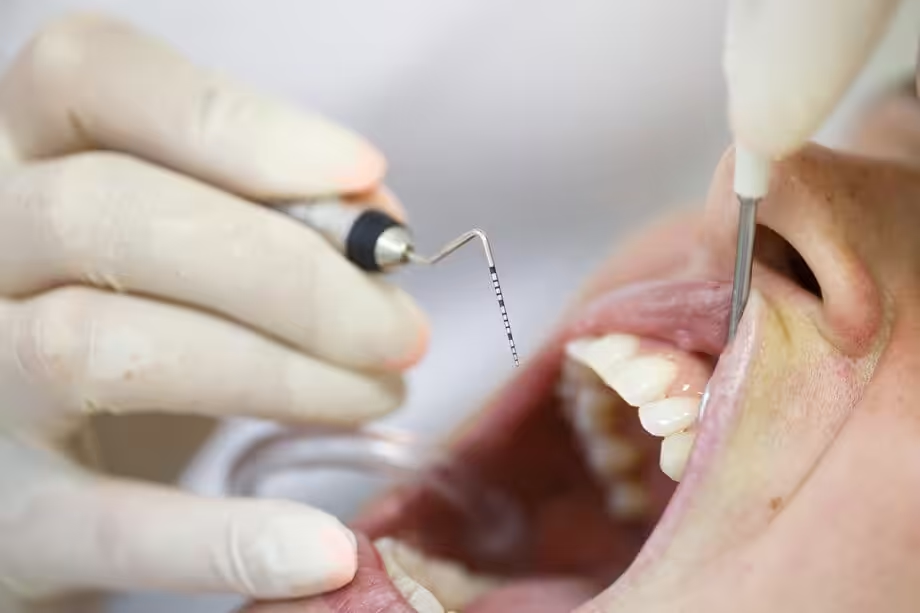
You may think that losing a tooth to gum disease is simply something that happens with age. That assumption feels reasonable — but it is exactly where the problem begins. Gum disease responds to treatment, and with the right periodontal care, you can keep the teeth you already have.
We see gum problems every day, and we know how simple it is to brush off the early signs. Bleeding when you brush, gums pulling away from your teeth, a tooth that feels slightly loose — none of these are things you should ride out. At Smiles on the Upper Westside, we use targeted periodontal therapy to eliminate infection, protect the bone that anchors your teeth, and give your natural smile a real chance to last.
Why Gum Disease Puts Your Teeth at Risk
Gum disease endangers your teeth by attacking the structure beneath them. Your teeth depend on your gums, soft tissue, and jawbone for support. When infection reaches that foundation, the entire structure starts to break down.
How Gum Disease Starts and Spreads
Everything begins with plaque — a soft, bacteria-laden film that accumulates along your gumline. Skip regular cleanings, and that plaque hardens, irritates your gum tissue, and triggers inflammation. Dentists call this early stage gingivitis. Your gums may appear red, feel sore, or bleed when you brush.
Without treatment, gingivitis advances to periodontitis. Deep pockets open up between your teeth and gums, bacteria move in, and the infection begins destroying the bone that keeps your teeth in place.
The Warning Signs You Should Not Ignore
You know your mouth better than anyone. Pay close attention when something feels off. Watch for gums that bleed with little provocation, gums that pull away from your teeth, exposed tooth roots, or a tooth that seems to shift. Persistent bad breath can also point to a problem working beneath the surface. Act on these signs — schedule a visit rather than waiting for things to worsen.
How Periodontal Therapy Stops the Damage
Periodontal therapy preserves your natural teeth by clearing the infection and giving the surrounding tissue a chance to recover. The goal is direct: remove bacteria, reduce inflammation, and create a stable environment where your teeth can stay healthy. We tailor each treatment to where your gum disease currently stands.
Deep Cleaning for Early Gum Disease
We catch gum disease early whenever we can, and in those cases, a deep cleaning called scaling and root planing often resolves the problem. We clean the pockets that develop between your teeth and gums, working below the gumline where a standard cleaning never reaches. Once we clear the buildup, your gums can heal and reattach to the tooth surface.
Laser Therapy for Advanced Cases
When gum disease progresses further, we move to laser periodontal surgery. We remove bacteria and infected tissue, then seal the pockets — all with significantly less trauma than conventional gum surgery. No incisions, no sutures, and a recovery that's often shorter and more comfortable. Our periodontics services also include laser bacterial reduction, a precise treatment that targets harmful bacteria below the gumline while leaving healthy tissue intact.
Rebuilding What Gum Disease Takes Away
Periodontal therapy doesn't just stop infection—it can also restore what the disease destroyed. Advanced gum disease often leaves receding gums, reduced bone, and visible gaps in your smile. We offer targeted procedures that repair that damage and protect the teeth you still have.
Restoring Receding Gums
When gum disease pulls your gum tissue away from your teeth, gum grafting rebuilds the coverage you lost. We take healthy tissue from the roof of your mouth or nearby gum tissue and attach it to the area that needs support. Grafting covers exposed roots, reduces tooth sensitivity, and restores a natural-looking gumline.
Protecting and Rebuilding Bone
Bone loss destabilizes your teeth and can gradually alter the contour of your face. Bone grafting replaces the lost bone and restores a firmer foundation for your teeth. When a tooth has already been removed, ridge preservation and bone regeneration help your body maintain a solid jaw structure — keeping neighboring teeth stable and setting the stage if you ever choose a dental implant.
Take the First Step Toward Healthier Gums
Keeping your natural teeth means addressing gum disease before it takes hold. The earlier you act, the more of your smile you preserve. Early-stage gum disease is fully reversible, and even more advanced cases respond well to the right treatment plan.
If you notice bleeding gums, increased sensitivity, or a tooth that feels loose, don't wait for it to worsen. Contact us today to schedule a periodontal evaluation. We will assess what is happening, walk you through your options in plain language, and build a plan that fits your situation.